Packaging Guides
What Actually Goes Into a Printed Tape Order Before It Ships
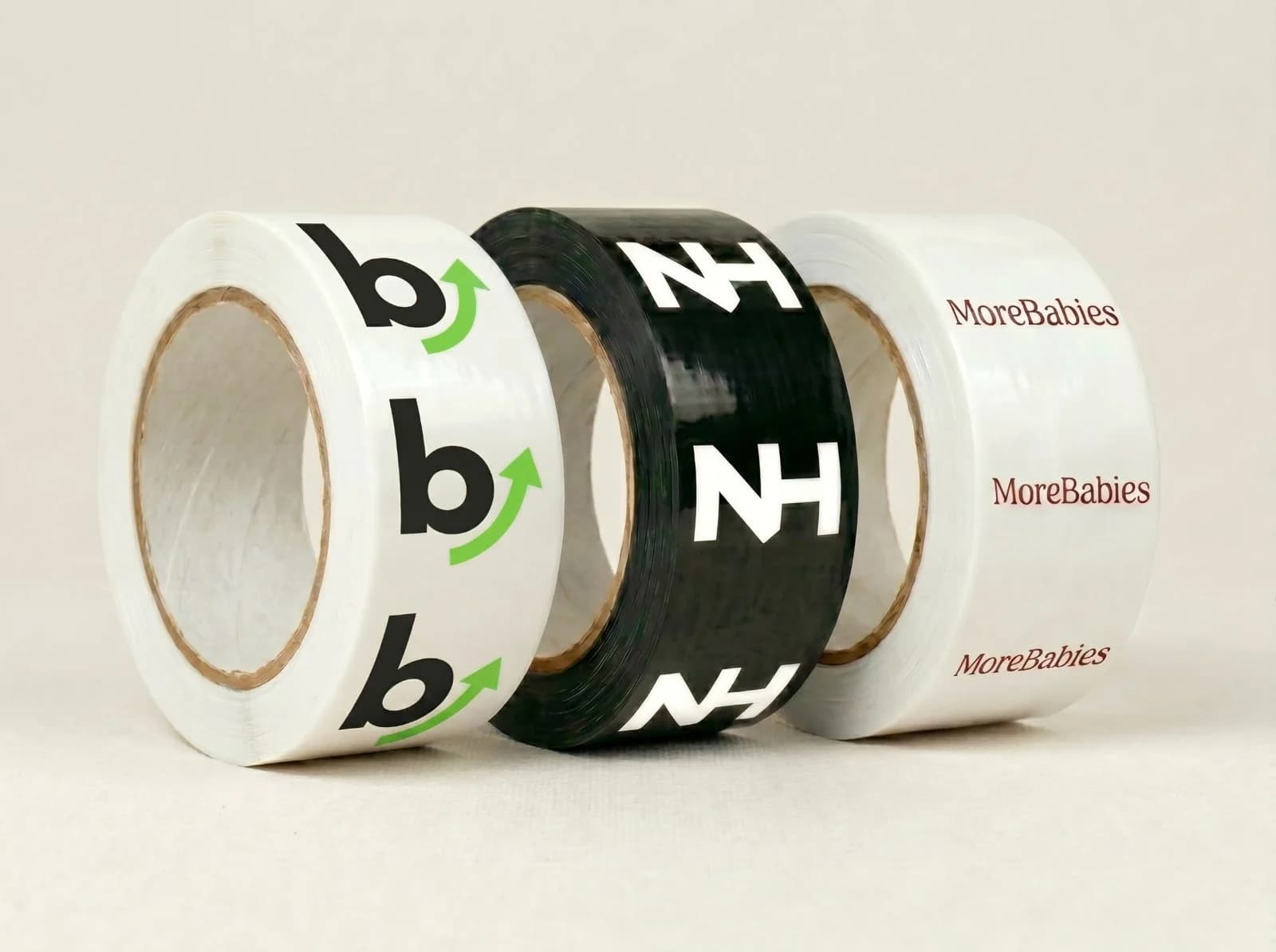
A lot of buyers call us wanting printed tape for the first time and expect it to work like a print shop order: send a file, get a proof, get boxes in a week. Rotogravure printing does not work that way. There is a physical cylinder involved, and that changes the timeline and the minimum quantity. Here is what actually happens between the day you send artwork and the day printed rolls leave our Mundka facility.
Artwork requirements
We print using rotogravure, which means your design gets etched onto a metal cylinder that physically presses ink onto the tape as it runs through the coating line. This is different from digital printing where the file goes straight to the printer.
For this, we need vector artwork, not a photograph or a low-resolution logo pulled off a website. Formats like AI, EPS, or a high-resolution PDF with outlined fonts work best. If your design has fine text below a certain point size, or thin hairlines, it may not etch cleanly on the cylinder and can blur once the tape is running at speed. We flag this at the artwork stage, before cylinder-making starts, because fixing it later means a new cylinder.
Pantone references help a lot. If you tell us “our brand blue” without a code, we end up matching by eye, and that is never going to be exact. If your packaging or courier bags already use a Pantone shade, send that code along with the logo file.
Colour separation and why colour count matters
We print up to 3 colours on custom tape. Each colour in your design needs its own separation, and in gravure printing, each colour also means its own cylinder or its own engraved section on the cylinder, depending on press configuration. A single-colour logo on brown tape is simple. A 3-colour design with gradients or overlapping tones is not, because gravure printing does not blend colours on press the way offset or digital printing can. What looks like a gradient in your design file may need to be simplified into flat colour bands to print correctly.
This is also where cost and complexity scale up. A 1-colour print is the fastest and cheapest to set up. Each additional colour adds registration complexity, meaning the rollers need to align precisely so the colours land in the right place relative to each other on a moving web of tape. Get the registration slightly off and text can look doubled or colours can bleed into each other. We check this at proofing stage before running the full order.
Cylinder cost and what it covers
The cylinder is the one-time cost that buyers are often not expecting. It is a physical engraved metal roll that becomes reusable for every reorder of that same design, at that same tape width. This is not a running cost per roll, it is a setup cost you pay once.
Because of this, we do not quote cylinder pricing off a blind logo file. It depends on the width of tape, the number of colours, and the complexity of the design (fine detail costs more to engrave accurately than a simple block logo). Once the cylinder is made and stored with us, repeat orders skip this cost entirely and go straight to production, which is why customers who print regularly usually order in bigger batches after the first run.
One practical point: if you think you will want the same design on multiple tape widths later, for example both 48mm and 72mm, mention it upfront. Cylinders are width specific, so planning ahead can save a second cylinder cost down the line.
Lead time, start to finish
A first-time printed tape order generally moves through these stages:
- Artwork review and correction, usually 1 to 3 days depending on how print-ready the file is
- Cylinder engraving, which typically takes the bulk of the lead time
- Proof run and colour check on the actual coating line
- Full production run, coating and slitting
- Packing and dispatch
Reorders using an existing cylinder skip the engraving step entirely, which is the main reason repeat orders ship faster than first orders. If you are working against a launch date or a packaging deadline, tell us that date at the artwork stage, not after the cylinder is already being cut.
Minimum order quantity
Printed tape has a higher MOQ than plain or coloured tape, because of the cylinder investment and because a coating line runs most efficiently in longer batches, not short stop-start runs. If your monthly tape usage is small, it is worth calculating how many months of stock a single print run covers before committing, rather than ordering little and often. Most businesses that move to printed tape are already using enough plain tape monthly that the switch works out, since printed tape also does double duty as light branding and tamper-evidence on every carton that leaves the warehouse.
What to have ready before you call
- Vector logo file, ideally with Pantone codes
- Tape width and micron thickness you currently use or need
- Number of colours in the design
- Rough monthly volume, so we can advise on MOQ and run length
- Any hard deadline for when the tape needs to be in hand
Printed tape is a good decision for a lot of businesses, it just involves one extra step compared to plain tape, and it pays to know that step before you are mid-order and surprised by it.
Your product, our package
Send us your requirement
Widths, colours, artwork, monthly volume: share what you need and we will come back with a price and a date.