Packaging Guides
Water-Based Acrylic, Hot-Melt or Solvent Tape: What to Pick
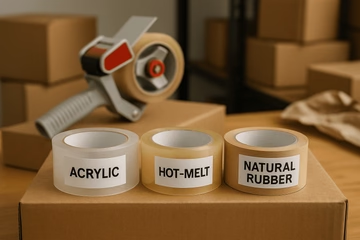
Most buyers pick tape by width and thickness and stop there. But the adhesive underneath the BOPP film decides whether that carton stays shut for two days on a delivery bike or six weeks on a container ship. There are three adhesive families used in carton sealing tape: water-based acrylic, hot-melt (rubber-based), and solvent-based acrylic. Each behaves differently, and picking the wrong one costs you returns, not rupees.
Peel strength vs shear strength, and why the difference matters
Two numbers describe how any adhesive performs, and they pull in different directions.
- Peel strength is how hard it is to pull the tape off the surface it’s stuck to. High peel means the tape grabs the carton fast and holds well against someone trying to lift a flap.
- Shear strength is how well the tape resists slow, sustained sideways stress, like a heavy carton sitting in a stack for weeks, or a box that shifts slightly in transit every day for a month.
A tape can be strong on one and weak on the other. This is the root of most “why did this tape fail” complaints. A carton that pops open during a fast delivery run has a peel problem. A carton whose flaps slowly lift open after sitting in a warehouse for three weeks has a shear problem. Different adhesive chemistries lean toward one or the other.
Water-based acrylic adhesive
This is what we coat most of our BOPP rolls with at our Mundka facility, and it’s the standard choice across e-commerce, FMCG, and general carton sealing in India.
- Peel: Moderate to good, builds over the first few hours after application.
- Shear: Good, holds up well under long-term static load.
- UV and ageing resistance: Strong. Acrylic doesn’t yellow or turn brittle in sunlight the way rubber-based adhesives do, so it holds up in outdoor storage, on truck beds, or in warehouses with skylights.
- Temperature range: Performs consistently between roughly 0°C and 45°C, which covers most of India’s climate and cold-chain edge cases reasonably well.
- Cost and consistency: Lower cost to produce, and water-based coating is easier to keep consistent across a long production run, which matters if you’re buying jumbo rolls and slitting them down yourself.
Acrylic is the right default for e-commerce parcels, FMCG cartons, footwear and apparel boxes, and general trader or distributor use where cartons move through a normal supply chain and aren’t sitting in extreme heat or cold for extended periods.
Hot-melt (rubber-based) adhesive
Hot-melt tape is made by heating a rubber-resin compound and coating it onto the film without water or solvent, so it sets fast.
- Peel: Very high, and it grabs instantly on contact. No wait time needed for initial tack.
- Shear: Weaker than acrylic over long periods, especially under heat, because rubber softens as temperature rises.
- Surface tolerance: Sticks well to rough, dusty, or recycled cartons where acrylic might struggle to get a clean bite.
- Ageing: Poor. Rubber-based adhesive yellows and can turn brittle with UV exposure and time, so it’s a bad fit for anything stored for months.
Hot-melt suits high-speed automated packing lines where instant tack matters more than long-term shear, and for sealing cartons that will be used and opened within days, not weeks. It’s less suited to export shipments or long warehouse storage.
Solvent-based acrylic adhesive
Solvent adhesive is applied by dissolving acrylic resin in a solvent carrier, which lets it penetrate rough or oily carton surfaces better than water-based acrylic can.
- Peel: Very good, often the highest initial tack of the three on difficult surfaces.
- Shear: Very good, comparable to or better than water-based acrylic, and it holds up better at higher temperatures.
- Surface range: Handles low-quality, recycled, or dusty cartons and even some plastic surfaces better than water-based versions.
- Trade-off: Higher production cost, and the manufacturing process involves solvent handling and emissions controls, which is why fewer manufacturers offer it and why it typically costs more per roll.
Solvent-based tape is generally reserved for demanding applications: export cartons that face temperature swings during ocean freight, heavier industrial packaging, or surfaces where water-based acrylic just won’t hold.
Matching adhesive to carton type
- E-commerce parcels, FMCG, short transit (1-4 days): water-based acrylic, 40-45 micron, standard peel and shear are more than enough.
- Heavier cartons, longer domestic transit, warehousing before dispatch: water-based acrylic at 50-60 micron for the extra shear needed to survive stacking.
- High-speed automated sealing lines: hot-melt, where instant tack on contact reduces machine downtime.
- Export shipments, repeated handling, long storage, rough or recycled cartons: solvent-based acrylic or higher-micron acrylic at 65+ micron, matched to the specific surface and climate conditions.
- Cold-chain and pharma cartons: water-based acrylic tested for the specific cold storage range, since adhesive tack drops as temperature falls and needs to be checked against your actual storage conditions, not just the general spec sheet.
What we run in Mundka
Our line is set up for water-based acrylic coating across our BOPP jumbo and mini jumbo rolls, from 192mm to 1320mm widths, in the 35 to 65+ micron range. We don’t produce hot-melt or solvent tape in-house. If your operation runs high-speed automated sealers where hot-melt is the better fit, or you’re sealing rough recycled cartons that need solvent-grade tack, it’s worth telling your supplier that upfront rather than discovering it after a batch of returns. Adhesive chemistry is not a detail to skip past when you’re specifying tape, it’s the part of the roll that actually does the job.
Your product, our package
Send us your requirement
Widths, colours, artwork, monthly volume: share what you need and we will come back with a price and a date.