
Packaging Guides
Sealing Tape for Footwear and Apparel: Light Cartons, Real Branding
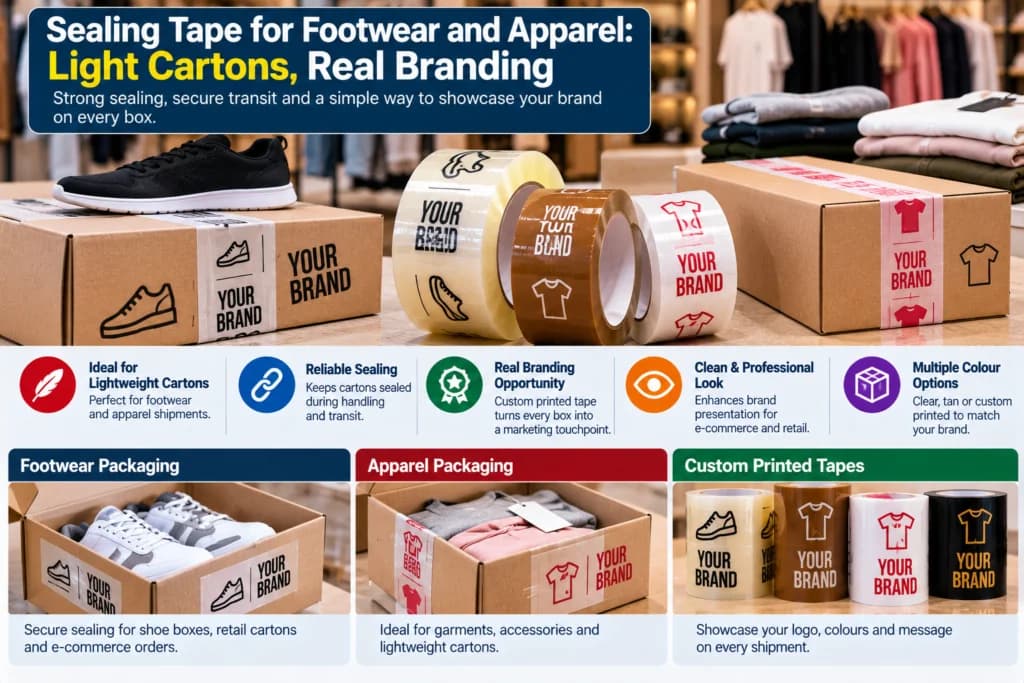
Footwear and apparel cartons are a different animal from, say, auto parts or hardware. The boxes are lighter, the handling is less brutal, but the carton often doubles as a brand touchpoint. A shoe box or a garment carton might get opened in front of a customer, photographed for a return, or sit on a store receiving dock where a buyer forms an opinion about your brand before the product is even unwrapped. Tape plays a bigger role in this than most packaging managers give it credit for.
Why footwear and apparel cartons don’t need heavy tape
A single pair of shoes weighs anywhere from 400 grams to 1.2 kg. A folded garment weighs even less. Even a carton packed with a dozen pairs or two dozen folded shirts rarely crosses 10-12 kg. Compare that to a carton of machine parts or ceramic tiles and you’ll see why footwear and apparel don’t need the same sealing strength.
For this category, 35-40 micron tape handles most needs. It seals the carton flaps securely, holds through a short to medium transit, and does the job without adding unnecessary material cost. If the carton is going through multiple handling points, say a fulfilment center, a distributor, and then a retail store, moving up to 45 micron gives you a safety margin without overbuilding the pack.
Where this changes is export. If footwear or apparel cartons are going by sea freight, stacked in a container for weeks, or handled by multiple freight forwarders, 50-60 micron makes more sense. The carton isn’t heavier, but the number of touchpoints and the duration of transit go up, and thinner tape can start lifting at the edges over time.
Retail-ready presentation matters more here than in most categories
A lot of footwear and apparel cartons are not meant to be destroyed at the warehouse and discarded. They go straight to a retail backroom, sometimes straight to the shop floor. A carton with mismatched tape colors, patchy adhesive coverage, or a dull, cloudy BOPP finish looks careless, even if the product inside is fine. Retail buyers notice this. It’s a small thing, but it adds up to how a brand is perceived at the point of first contact.
A clean, consistent tape line across every carton in a shipment signals that the operation is organized. This matters more for apparel and footwear brands selling through multi-brand retail or department stores, where your carton sits next to a dozen competitors’ cartons on the same loading dock.
Branding through printed tape
This is where footwear and apparel differ sharply from, say, industrial or FMCG cartons. The carton itself is often a marketing surface. Printed tape running down the center seam of every box with a logo, a tagline, or even a simple “Handle With Care, Footwear Inside” message does two things at once: it seals the carton and it reinforces brand recall at every handling point from the factory floor to the customer’s doorstep.
We print up to 3 colors using rotogravure printing, which gives sharp, consistent reproduction across a full production run, not just the first few rolls. For footwear and apparel brands, common printed tape choices include:
- Brand logo and name, repeated at regular intervals down the tape
- A tagline or care instruction specific to the product category
- A distinct brand color instead of plain or brown, used consistently across SKUs
- QR codes or simple graphic marks for retail or e-commerce tracking
Coloured tape alone, even without printing, is a low-cost way to make cartons instantly recognizable on a crowded dock or in a mixed pallet. Some apparel brands use one color for domestic orders and another for export, which also helps warehouse staff sort shipments faster without reading labels.
Practical considerations before you order
A few things worth checking before placing a bulk order for footwear or apparel packaging tape:
- Carton board quality: lighter cartons sometimes use thinner board, and tape adhesion needs to match the surface, not just the load weight.
- Climate during transit: apparel shipments to humid coastal regions or hot inland areas need adhesive that holds without going brittle or overly tacky.
- Print turnaround: printed tape has a longer lead time than plain tape because of plate setup and color matching, so factor this into your packaging timeline, especially around seasonal launches.
- Roll width: standard 48mm tape works for most cartons, but smaller shoe boxes or individual garment polybags sometimes need narrower widths for a cleaner seal.
Getting the balance right
The mistake we see most often is footwear and apparel brands either overspending on heavy-duty tape they don’t need for light cartons, or underspending on a plain, unbranded roll that does nothing for how the shipment looks on arrival. Neither extreme serves the business well. The right approach is picking a micron that matches your actual transit conditions, usually 35-45 for domestic and 50-60 for export, and then using the branding opportunity on that same tape to reinforce who the shipment is from.
At Sonison Packaging, we work with footwear and apparel sellers on both plain and printed BOPP tape, producing it in-house from coating to slitting at our Mundka facility in New Delhi. If you’re setting up tape specs for a new product line or a seasonal retail push, it helps to work backward from your actual carton weight and handling chain rather than ordering what you used last time by default.
Your product, our package
Send us your requirement
Widths, colours, artwork, monthly volume: share what you need and we will come back with a price and a date.