
Packaging Guides
Peel Adhesion and Tensile Strength: A Buyer’s Plain Guide
If you have ever asked a tape supplier for a datasheet and got back a sheet full of numbers you did not understand, you are not alone. Most buyers order tape by feel: they stick a strip on a carton, pull it, and decide if it seems strong enough. That works most of the time, but it does not tell you why a tape fails on a hot afternoon in a warehouse, or why a tape that felt fine in the office splits open in transit.
Two numbers on the datasheet explain most of that: peel adhesion and tensile strength. Once you understand what each one measures, reading a datasheet takes two minutes instead of feeling like guesswork.
What peel adhesion actually tells you
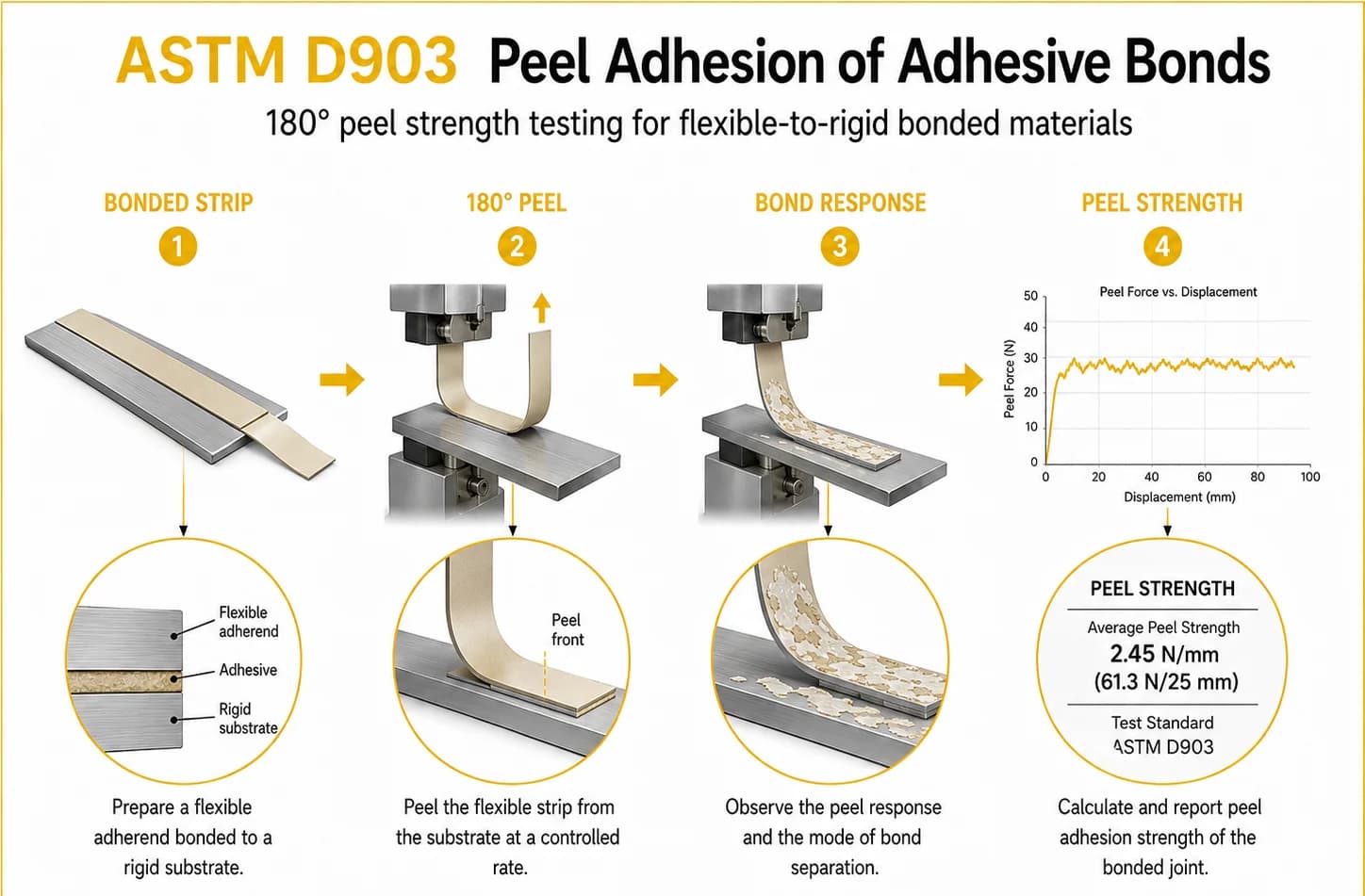
Peel adhesion measures how hard it is to pull the tape off a surface once it is stuck down. In a lab, this is done by sticking a strip of tape onto a steel plate, waiting a set time, then pulling the tape back at a fixed angle and speed, and measuring the force needed to peel it off. The result is usually written in grams per 25mm (g/25mm) or newtons per centimetre.
In plain terms: this number tells you how well the tape grips the carton surface. Higher peel adhesion means the tape holds on tighter and resists being lifted at the edges or corners.
This matters more than people think. A carton with low peel adhesion tape might look sealed on the day you pack it, but after a few days in a truck, corners lift, flaps pop open slightly, and moisture or dust gets in. This is especially common with:
- Recycled or low grade cartons that have a rougher, less absorbent surface
- Cold storage or high humidity routes where adhesive grip weakens over time
- Export shipments that sit in containers for weeks before opening
For a light domestic shipment moving one day by road, a tape with moderate peel adhesion is usually fine. For an export box that will be handled five or six times and stored for a month, you want a tape with higher peel adhesion so the seal does not weaken along the way.
Why peel adhesion is not the only thing that matters
A tape can have excellent peel adhesion and still be the wrong choice if it tears easily. That is where tensile strength comes in.
What tensile strength actually tells you
Tensile strength measures how much pulling force the tape backing itself can take before it snaps or tears. In testing, a strip of tape is pulled from both ends until it breaks, and the force at that breaking point is recorded, usually in kilograms per 25mm width.
In plain terms: this number tells you how tough the tape film is, separate from how sticky it is. A tape can be extremely sticky and still tear apart under load if the film itself is thin or weak. This matters when:
- Cartons are heavy and the tape is stretched during handling, lifting, or stacking
- Boxes go through automated sealing machines that apply tension while sealing
- Tape is used to bundle or strap items, not just seal a flap
Tensile strength is closely tied to the micron thickness of the tape. A 35 micron tape will generally have lower tensile strength than a 50 or 60 micron tape, simply because there is more BOPP film material to resist the pull. That is one reason exporters and buyers shipping heavier cartons over long distances usually move up in micron thickness rather than relying on adhesive alone.
How the two work together
Think of it this way: peel adhesion is about grip, tensile strength is about toughness. A tape needs both, but not always in equal measure, depending on the job.
- Light e-commerce parcels, short transit: moderate peel adhesion and moderate tensile strength are usually enough, this is where 35-40 micron tape works fine.
- Standard FMCG and e-commerce cartons: balanced peel adhesion and tensile strength, which is why 45 micron is the common default for this segment.
- Heavier cartons, longer domestic routes: higher tensile strength matters more, so 50-60 micron tape is the safer choice.
- Export cartons, repeated handling, long storage: both numbers need to be on the higher side, which is where 65+ micron tape is typically used.
If you only look at peel adhesion, you might pick a tape that grips well on day one but tears when the carton is dropped or dragged. If you only look at tensile strength, you might pick a tape that never tears but does not hold the flap down properly after a few days. The two numbers need to be read together, against the actual job the tape has to do.
What to ask your supplier
When you are reviewing a datasheet or asking for one, it helps to ask specifically:
- What is the peel adhesion value, and at what micron thickness was it tested?
- What is the tensile strength value for that same tape?
- Is this tape rated for the kind of transit and storage conditions my cartons will actually face?
A supplier who runs their own coating and slitting line should be able to answer these without hesitation, because these are the exact numbers checked during production, not just marketing figures. At Sonison Packaging, every roll that leaves our Mundka facility is coated and slit in-house, which means we test these values as part of the regular production process, not as a one-off lab exercise.
Understanding these two numbers will not make you a chemist, but it will make you a more confident buyer. Next time a datasheet lands in your inbox, you will know exactly which two lines to check first.
Your product, our package
Send us your requirement
Widths, colours, artwork, monthly volume: share what you need and we will come back with a price and a date.