
Packaging Guides
Paper Cores in BOPP Tape: The Part Nobody Checks First
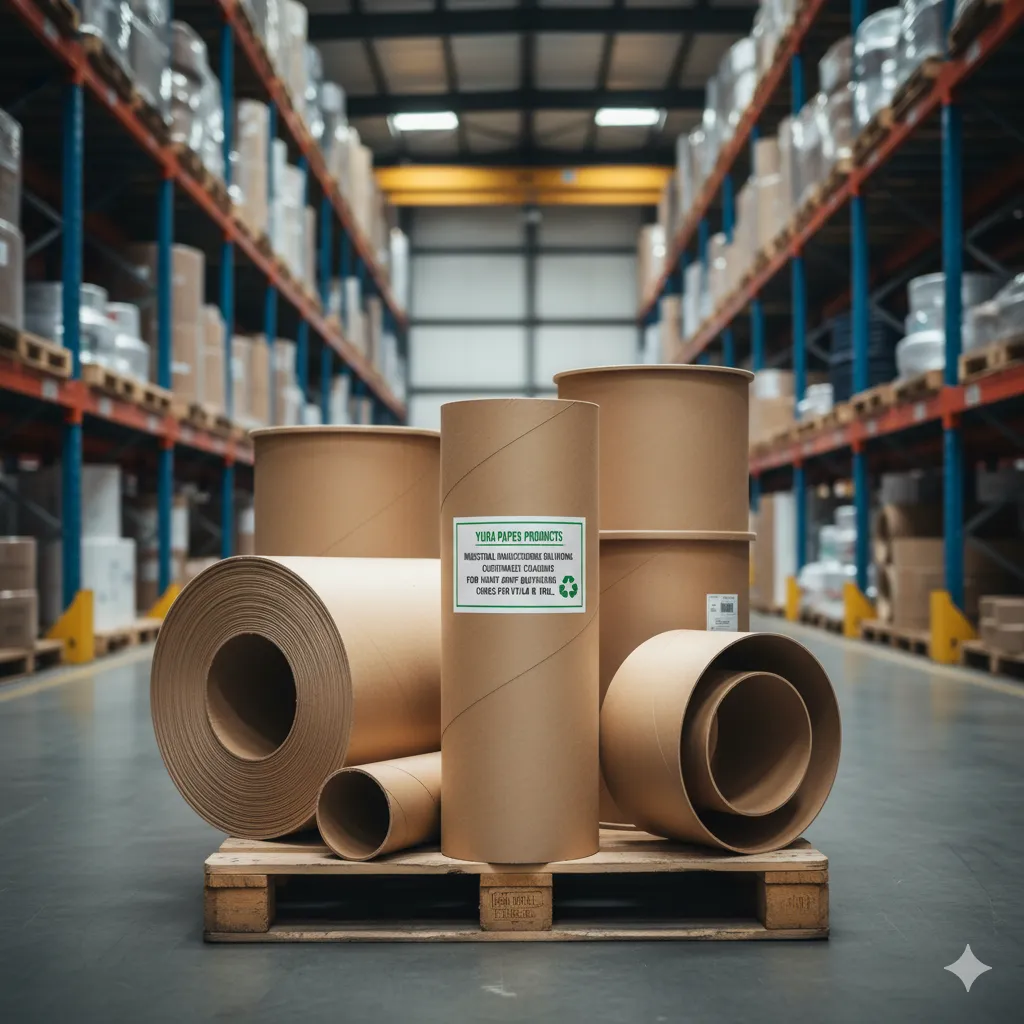
When buyers evaluate tape, they look at adhesion, film thickness, and price per roll. Almost nobody asks about the paper core underneath. That is a mistake. The core holds the roll together, keeps it running straight on a dispenser, and determines whether your slitting or unwind process runs smooth or stops every few minutes. A bad core can make a good tape look bad.
What a paper core actually does
The paper core is the tube in the centre of the roll, usually made of wound kraft paper layers bonded with adhesive. It is not just a support. It sets the winding tension for the entire roll, keeps the inner diameter (ID) consistent from roll to roll, and resists crushing during transit and handling. If the core is off by even a millimetre in ID, or if it is soft and out of round, the problems show up later, usually on your line, not ours.
Inner diameter consistency: why it matters more than it sounds
Most BOPP tape rolls are wound on a 3 inch (76mm) ID core. That sounds like a fixed standard, but tolerances vary a lot between manufacturers. A core that is slightly oversized will spin loose on the dispenser spindle, causing uneven unwind and tape that tears at the edge. A core that is undersized will not fit the spindle at all, or it will crack under pressure when forced on.
For automatic taping machines and box-sealing equipment, this tolerance matters even more. These machines expect a snug, repeatable fit every single time. If one roll in a batch has a slightly different ID, the machine either jams or applies tape unevenly. On a manual dispenser this is annoying. On an automated packing line running thousands of boxes a day, it is a real cost.
Telescoping: the problem buyers usually misdiagnose
Telescoping is when the layers of tape shift sideways on the roll, so the roll looks like a staircase or a telescope tube instead of a clean cylinder. Buyers often blame this on the adhesive or the film, but in most cases it starts at the core.
If the core is wound with uneven tension, or if the paper layers inside the tube are not bonded flat, the core itself is not perfectly cylindrical or perfectly rigid. When BOPP film is wound onto it at high speed and then unwound later, any slight irregularity in the core gets transferred into the roll above it. Add rough handling, humidity, or stacking pressure during storage and transit, and a marginal core turns into a fully telescoped roll that jams a slitter or dispenser.
Telescoping shows up most often after:
- Rolls stacked flat for long periods without support
- Transit in trucks with vibration and no proper cushioning
- Storage in humid conditions where paper cores absorb moisture and soften
- Slitting on machines running at high line speed with tight tension settings
A rigid, consistently wound core resists all four of these better than a cheap, loosely wound one.
Why winding cores in-house makes a difference
Most tape manufacturers buy paper cores from a third party. That works fine as long as the core supplier is consistent. The problem is that core specs, ID tolerance, wall thickness, and paper grade often change between batches, and the tape manufacturer has no direct control over it. A buyer downstream has even less visibility, since the core is the one component nobody asks about on a purchase order.
At Sonison, core winding is done in-house at our Mundka facility, alongside the coating and slitting lines. This means:
- ID tolerance is checked against the same spindle setup used for slitting, so cores match the machines they will actually run on
- Core wall thickness stays consistent across a production run instead of varying batch to batch
- Winding tension is set to match the specific tape roll length and film gsm being produced, not a generic tube spec
- Any inconsistency shows up immediately on our own slitter, before the roll ever leaves the facility
This is not a marketing point about vertical integration for its own sake. It solves a real production problem: when core winding and tape winding happen under the same roof, defects get caught at the slitting stage instead of at the customer’s dispenser.
What buyers should actually check
If you are ordering BOPP jumbo rolls, mini jumbo rolls, or finished tape rolls, a few practical checks help before you commit to a large order:
- Ask the ID tolerance in writing, not just “3 inch standard”
- Ask if cores are made in-house or bought from a third party, and how often that supplier changes
- Check a sample roll for roundness by rolling it on a flat surface, a warped core wobbles visibly
- Ask how rolls are packed for transit, loose stacking increases telescoping risk regardless of core quality
Frequently Asked Questions
What is the standard inner diameter for BOPP tape cores?
Most BOPP tape rolls use a 3 inch (76mm) ID core, but “3 inch standard” isn’t a guarantee of tight tolerance. Different manufacturers hold different tolerance ranges around that number, and an oversized or undersized core can cause spindle fit and unwind problems even though it technically meets the 3 inch spec.
Why does telescoping happen on tape rolls?
Telescoping usually starts at the core, not the adhesive or film. An unevenly wound or poorly bonded core isn’t perfectly cylindrical or rigid, and that irregularity transfers into the tape wound on top of it. Rough handling, humidity, stacking pressure, and high-speed slitting all make an already marginal core more likely to telescope.
Are in-house wound cores better than third-party cores?
In-house winding gives a manufacturer direct control over ID tolerance, wall thickness, and winding tension, so cores are checked against the same spindle setup they’ll actually run on, and defects surface at the manufacturer’s own slitter rather than at a customer’s dispenser. With third-party cores, specs can drift batch to batch without the tape manufacturer, or the buyer, having visibility into that.
How can I check core quality before placing a bulk order?
Ask for the ID tolerance in writing rather than accepting “3 inch standard” at face value, ask whether cores are made in-house or sourced from a third party and how often that supplier changes, and roll a sample on a flat surface to check for roundness, a warped core wobbles visibly. Also ask how rolls are packed for transit, since loose stacking increases telescoping risk regardless of core quality.
Does core quality matter more for automatic taping machines?
Yes. Automatic taping and box-sealing equipment need a snug, repeatable spindle fit on every roll. A manual dispenser can tolerate small ID variation as an annoyance, but on an automated packing line running thousands of boxes a day, one roll with a slightly different ID can jam the machine or apply tape unevenly, which is a real production cost, not just an inconvenience.
What causes a paper core to soften or lose rigidity during storage?
Humidity is the main culprit, paper cores absorb moisture in humid storage conditions and soften as a result. Combine that with rolls stacked flat for long periods without support, or vibration during transit without proper cushioning, and a core that started out marginal can lose enough rigidity to telescope before it ever reaches the customer.
The bottom line
Tape quality is not only about adhesive formulation or film micron thickness. The core is a structural part of the roll, and a weak or inconsistent one undermines everything built on top of it. Buyers who ask about cores usually end up with fewer machine stoppages, less wasted tape from telescoped rolls, and a smoother slitting or packing operation overall.
Your product, our package
Send us your requirement
Widths, colours, artwork, monthly volume: share what you need and we will come back with a price and a date.