
Packaging Guides
Ordering Tape on Price Alone: Mistakes That Cost You Later
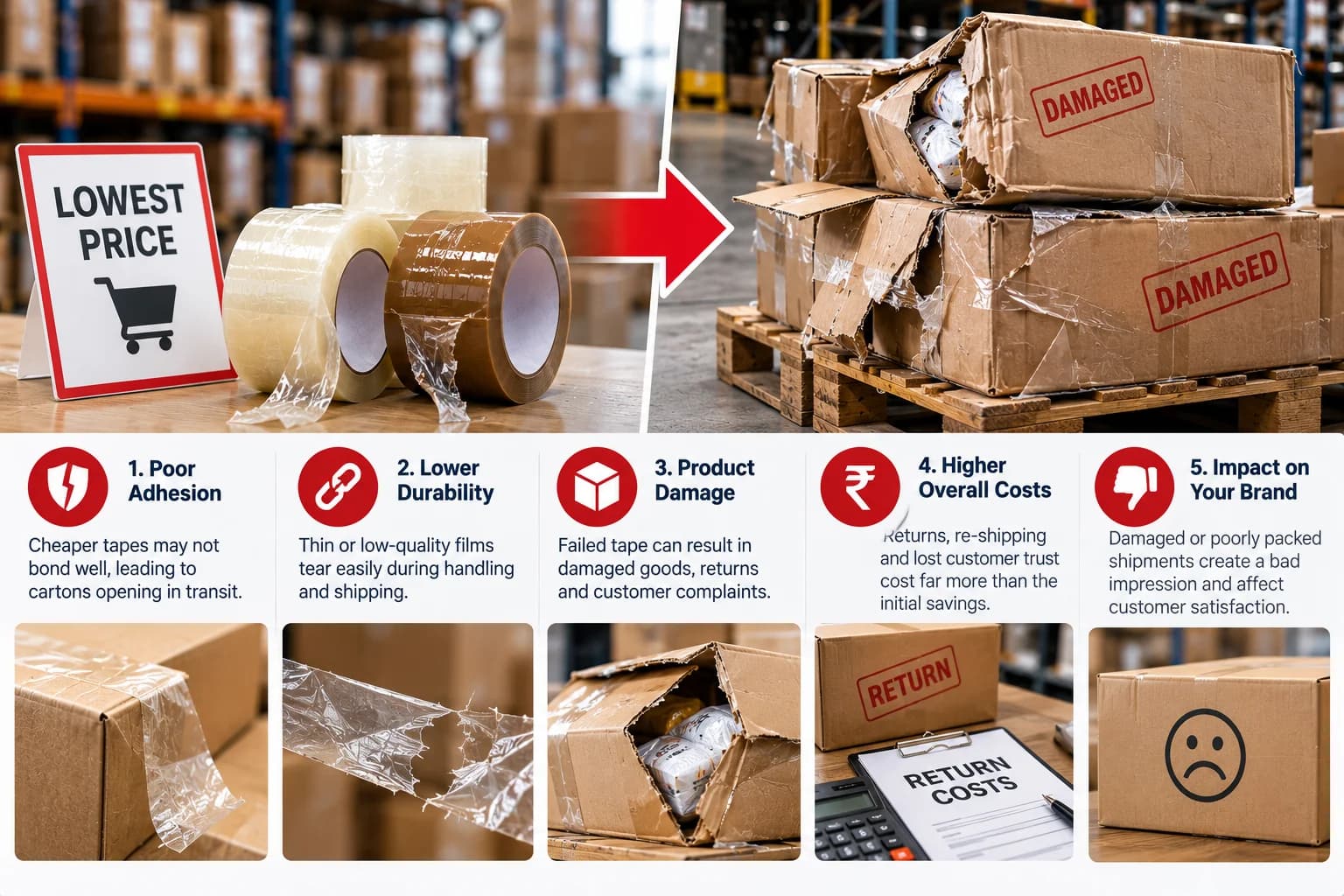
Most tape complaints we hear are not about the tape itself. They are about how it was ordered. A buyer picks a micron to hit a target price, the tape sits in a hot storeroom for weeks, and nobody runs a trial before placing a bulk order. By the time cartons start opening in transit, the problem looks like a quality issue. Often it is an ordering issue.
Here are three mistakes we see repeatedly, and what to do instead.
1. Under-speccing micron to save a few paise per roll
Micron thickness is the first thing buyers try to cut when negotiating price. It seems like a safe place to save money because the tape still looks and feels fine off the roll. The problem shows up later, in transit or storage, not on the factory floor.
A 35-40 micron tape is built for light cartons on a short, single-leg journey. It is not meant to hold a 15 kg carton through two reloads and a week in a transit warehouse. When buyers order 35 micron tape for FMCG or e-commerce loads that actually need 45 micron, the tape holds fine for the first mile and then starts lifting at the flap edges by the time it reaches the final leg.
The saving on paper is real: thinner tape costs less per roll and you get more linear meters per kg. But the maths changes once you count:
- Reopened cartons that need re-taping at a hub or by the customer
- Returns and complaints logged against “damaged packaging”
- Extra tape used in the field because the first pass is not holding, which defeats the original saving
Match micron to the actual weight and handling, not just the carton size. As a rough guide: 35-40 micron for light goods on short transit, 45 micron for standard e-commerce and FMCG cartons, 50-60 micron for heavier cartons or longer transit, and 65 micron and above for export loads that get handled repeatedly and stored for weeks before they even leave the port. If you are not sure which band your product sits in, describe the carton weight, the number of handling points, and the typical storage time to your supplier and let them recommend the gauge.
2. Ignoring where the tape will actually sit before use
Buyers plan for the shipment but not for the storeroom. BOPP tape is sensitive to heat and direct sunlight well before it ever reaches a carton. Rolls stored near a tin roof, next to a window, or stacked on a factory floor that gets hot in summer will lose adhesion strength even if they are used within a few weeks.
This is less about the tape’s shelf life and more about the micro-environment it sits in while waiting to be used. Adhesive is a coating, and coatings respond to heat the same way any other chemical layer does. High heat softens the adhesive unevenly, humidity affects how it bonds to the carton surface, and both together are worse than either alone.
Before placing a large order, it is worth asking a basic question internally: where exactly will these rolls sit for the next one to three months? If the answer is an un-insulated shed roof or near a loading dock exposed to direct sun, either fix the storage spot or order in smaller, more frequent batches so rolls are not sitting around at their worst for long.
3. Skipping the sample roll before the bulk order
This is the easiest mistake to avoid and the one we see most often. A buyer gets a quote, likes the number, and places a full order of a few hundred rolls without running even one roll through an actual carton first. The first real test happens on the live order, which means any mismatch, whether in micron, adhesive strength, or print quality, surfaces after the material is already on the floor.
A sample roll costs almost nothing compared to a full order and takes a day or two to test properly. Run it exactly the way you will run the real order:
- Seal a few actual cartons at the weight and fill you normally ship, not an empty box
- Check adhesion after it sits for a few hours, not just right after sealing
- If it is a printed tape, check the print clarity and colour match against your artwork
- If your line runs at speed, test it on the actual taping machine, not by hand
If the tape performs well on the sample, you order with confidence. If it does not, you have caught the problem before it cost you a full batch and a delayed dispatch.
Putting it together
None of these three mistakes are about buying the most expensive tape available. They are about ordering with the actual job in mind: the real weight of the carton, the real conditions the roll will sit in before use, and real testing before a full commitment. A slightly higher per-roll cost on the right micron, stored properly, and tested before bulk ordering almost always works out cheaper than a lower price that fails somewhere between your dispatch dock and your customer’s doorstep.
If you are planning a bulk order and are not sure which micron or adhesive fits your product, it is worth sending your carton weight, transit route, and storage conditions to your supplier and asking for a sample roll first. It is a small step that avoids most of the problems buyers run into later.
Your product, our package
Send us your requirement
Widths, colours, artwork, monthly volume: share what you need and we will come back with a price and a date.