
Packaging Guides
GST and Invoicing for Bulk Tape Orders: What to Expect on Paperwork
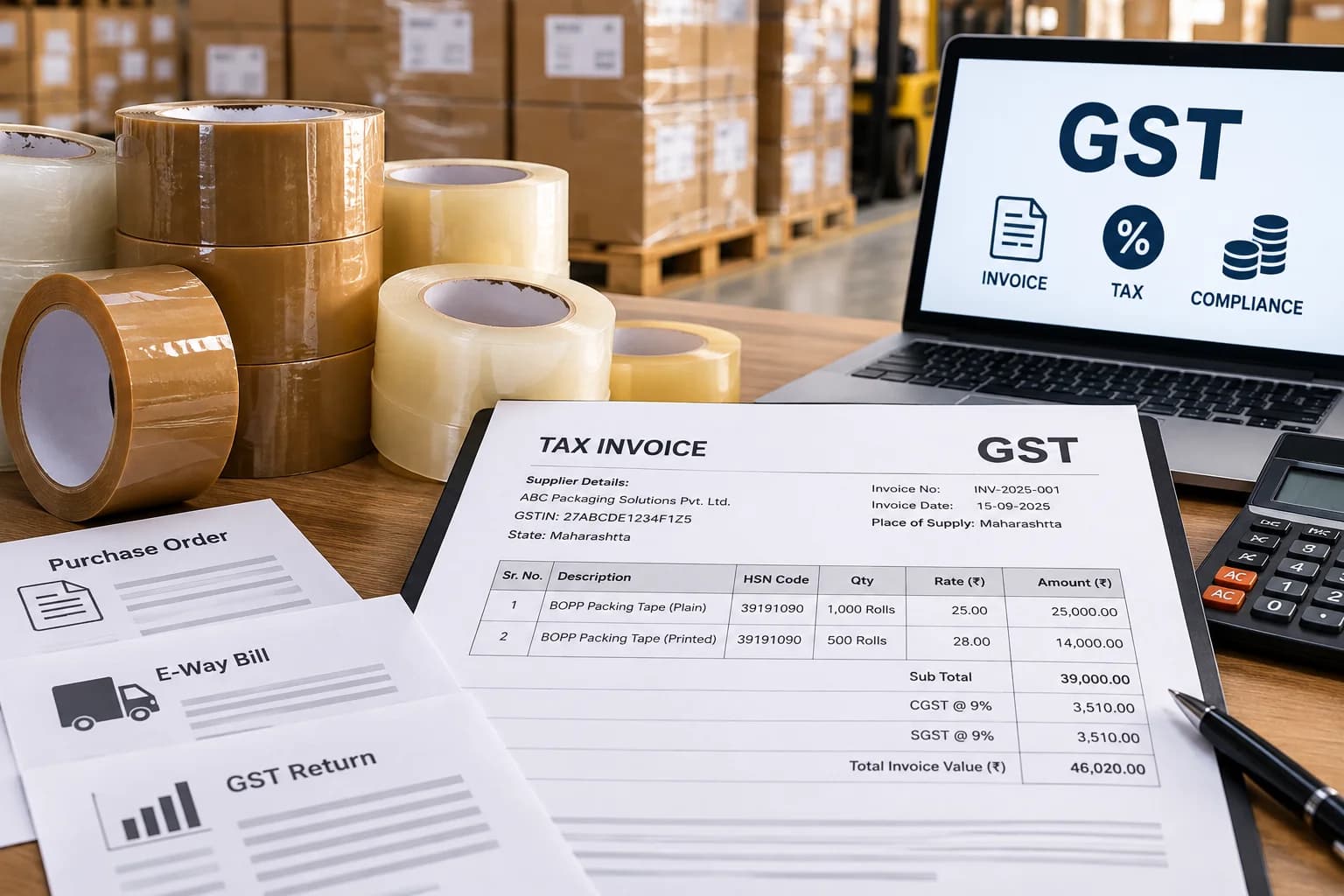
When a business places a bulk order for BOPP tape, the conversation usually centres on price, micron and delivery date. The paperwork side often gets attention only after a truck is stopped at a check post or an accountant flags a mismatched invoice. This article covers what a business buyer should actually expect on GST invoicing and e-way bills when ordering tape in bulk, so there are no surprises at dispatch.
GST rate on BOPP tape
BOPP self-adhesive tape falls under HSN code 3919, which covers self-adhesive plates, sheets, film and other flat shapes of plastic. Tape under this heading attracts 18% GST. This applies whether you are buying plain tape, coloured tape, custom printed tape, or jumbo rolls meant for slitting. Paper cores and tubes used in the same order may carry a different HSN code and rate, so a combined invoice should show them as separate line items, not clubbed under one rate.
If your supplier quotes a single all-inclusive price without breaking out GST, ask for the breakup before placing the order. A proper tax invoice always shows the taxable value and the GST amount separately, never a lump sum with tax assumed to be inside.
What a proper tax invoice should contain
For a bulk purchase, the invoice you receive should include:
- Supplier’s name, address and GSTIN
- Buyer’s name, address and GSTIN (if registered)
- Invoice number and date, issued in sequence
- HSN code for each item (tape, cores, printed tape separately if priced differently)
- Description of goods: width, micron, length per roll, quantity of rolls or cartons
- Taxable value, CGST and SGST (or IGST for interstate supply), and total invoice value
- Place of supply, especially important for interstate dispatch
For a buyer claiming input tax credit, these details need to match what the supplier files in their GST returns. Mismatches between the invoice and the supplier’s GSTR filings are one of the most common reasons credit gets held up during reconciliation, so it is worth checking that your supplier files returns on time rather than assuming it from a clean-looking invoice.
CGST/SGST versus IGST
If the buyer and the manufacturer are in the same state, the invoice splits tax into CGST and SGST, each at 9% for an 18% slab item. If the goods move across state lines, which is common since many bulk buyers order from manufacturers outside their own state to get better pricing or specific widths, the invoice shows IGST at 18% instead. This is a straightforward swap but it affects how the credit sits in your books, so your accounts team should know in advance whether a shipment is intrastate or interstate.
E-way bills for dispatch
An e-way bill is required for the movement of goods when the consignment value crosses the threshold set under GST rules, currently above Rupees 50,000 for most interstate and many intrastate movements, though some states have their own intrastate thresholds. For bulk tape orders, where a single dispatch can involve several jumbo rolls, printed tape cartons and cores together, crossing this threshold is routine.
The e-way bill is generated online using the invoice details, the transporter’s vehicle number, and the distance to be covered. It must accompany the goods during transit along with the tax invoice. If your supplier is dispatching by their own vehicle or a regular transporter, they will usually generate this themselves, but as the buyer you should confirm:
- The e-way bill number is shared with you before or at the time of dispatch
- The vehicle number on the e-way bill matches the actual vehicle carrying the goods
- The value and quantity on the e-way bill match the invoice, not an estimate
If a vehicle is stopped for verification and the e-way bill details do not match the physical consignment, goods can be detained until the discrepancy is resolved. For a bulk order where timing matters, for instance stock needed before a seasonal spike, this kind of delay is avoidable with a quick check on your end before the truck leaves the supplier’s premises.
Part A and Part B of the e-way bill
Part A carries invoice and consignment details, and Part B carries vehicle and transporter details. Part B needs to be updated if the vehicle changes mid-transit, which can happen on longer routes involving a transshipment. If you are coordinating delivery across a long distance, for example tape moving from Delhi NCR to a southern or eastern state, ask your supplier whether a single vehicle covers the full route or whether transshipment is expected, so you are not caught off guard if the vehicle number on your tracking does not match what was first shared.
What to check before payment, not after
A few habits save time later:
- Confirm the HSN code and GST rate on the quotation before the formal invoice is raised
- Ask for the GSTIN of the supplier and verify it is active, which takes a minute on the GST portal
- Keep a copy of the e-way bill alongside the invoice for your own records, not just the transporter’s copy
- For recurring bulk orders, request that invoice numbering and format stay consistent, since this makes monthly reconciliation easier on both sides
Why this matters beyond compliance
None of this paperwork changes the tape itself, but it changes how smoothly a bulk order reaches your warehouse and how cleanly it sits in your books afterward. A supplier who gets invoicing and e-way bills right consistently is usually also the one who runs a tighter dispatch schedule overall. For a buyer placing repeat bulk orders, that consistency on paperwork is a reasonable proxy for how the rest of the operation is run.
Your product, our package
Send us your requirement
Widths, colours, artwork, monthly volume: share what you need and we will come back with a price and a date.