Packaging Guides
Custom Printed Tape MOQ: Why the Cylinder Cost Drives It
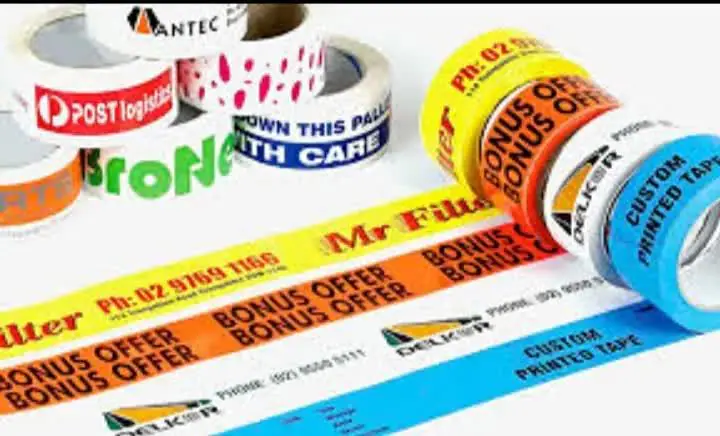
Every buyer who calls asking for printed tape with their logo eventually asks the same question: why can’t I just order 10 rolls? The answer has almost nothing to do with the tape itself and everything to do with how printing is set up on a rotogravure line. Once you understand the cylinder cost, the whole MOQ structure makes sense.
What actually costs money in custom printing
Plain tape production is simple. Film goes through the coating line, gets slit to width, and winds onto rolls. There’s no design involved, so a buyer can order any quantity that makes sense for their storage and usage.
Printed tape adds one extra step: the design has to be etched onto a metal printing cylinder before a single meter of tape can be printed. This cylinder is engraved specifically for that design, that width, and that repeat length. It’s not a stock item. It’s made to order, every time, for every new logo or artwork.
This engraving process has a fixed cost regardless of whether you print 500 rolls or 5,000 rolls with that cylinder. That fixed cost is the real reason MOQs exist. It has nothing to do with machine time, adhesive, or film, those scale linearly with quantity. The cylinder cost doesn’t scale at all. It’s a flat cost sitting on top of the order, and it has to be spread across enough rolls to make sense for both the manufacturer and the buyer.
Why cylinders are a one-time cost, not a recurring one
Here’s the part most first-time buyers don’t realize: once a cylinder is made for your design, it’s stored and reused for every future order of the same artwork. You pay for the engraving once. Reorders after that only carry the cost of film, adhesive, and printing run time, no repeat cylinder charge.
This changes the economics significantly for anyone planning to order printed tape more than once a year. The first order absorbs the cylinder cost, so it looks expensive per roll compared to plain tape. Every order after that is priced closer to plain tape, plus the printing run cost. If you’re a brand that reorders every quarter, the cylinder cost gets diluted across several thousand rolls over the year, not just the first batch.
What this means practically
- The cylinder is tied to a specific design, width, and colour count. Change the width and you need a new cylinder.
- Cylinders are usually kept on file by the manufacturer, so a reorder six months later doesn’t need re-engraving.
- Small text or logo tweaks may or may not need a new cylinder, depending on how much of the design changes. It’s worth asking before assuming a small edit is free.
How MOQ economics differ for small and large brands
A large FMCG brand ordering printed tape for a national distribution network will run enough volume that the cylinder cost barely registers per roll. They order in bulk, they reorder often, and the fixed cost gets absorbed fast.
A small D2C brand or a new exporter placing their first order faces a different math. They’re paying the full cylinder cost against a smaller roll count, which pushes the per-roll price higher for that first batch. This isn’t the manufacturer padding margins, it’s simply less volume to spread a fixed cost across.
A few ways smaller brands manage this in practice:
- Keep the design simple. Fewer colours means a simpler cylinder setup and lower engraving cost. A single-colour logo on a brown or coloured tape base is far cheaper to set up than a three-colour design with fine detail.
- Order for a longer runway. If your usage rate is steady, ordering enough tape for four to six months instead of one month spreads the cylinder cost further without tying up excessive warehouse space.
- Plan reorders around the same cylinder. If you know your design won’t change, tell the manufacturer upfront that this is a recurring order. It sometimes affects how the first order is quoted, since the cylinder is understood to be an investment against future volume, not a one-off.
What determines the MOQ number itself
MOQ isn’t an arbitrary number picked to sound impressive. It’s usually set at whatever roll count makes the cylinder cost a small enough fraction of the total order that pricing stays reasonable. Wider tape, more colours, or finer print detail all push the cylinder cost up, which pushes the MOQ up too if the manufacturer wants to keep per-roll pricing sensible.
At Sonison, we manufacture the printed tape in-house on our own rotogravure line at our Mundka facility, which means we can be direct with buyers about where the cost actually sits. We’d rather explain the cylinder economics upfront than have someone assume the MOQ is a sales tactic.
The bottom line for buyers
If you’re ordering custom printed tape for the first time, expect the first order to carry the heaviest cost. If you plan to reorder the same design, that cost effectively disappears from future orders. The smartest move for a small brand isn’t necessarily to find the lowest MOQ manufacturer, it’s to plan a design and quantity that makes the cylinder cost worth it over a full year of use, not just one batch.
Before finalizing artwork, ask your manufacturer directly how the cylinder cost is being calculated into your quote, and how long they retain cylinders on file for reorders. That single conversation usually explains most of what confuses first-time buyers about MOQ.
Your product, our package
Send us your requirement
Widths, colours, artwork, monthly volume: share what you need and we will come back with a price and a date.