
Packaging Guides
BOPP Tape vs PVC Tape: Clarity, Noise and Machine Speed
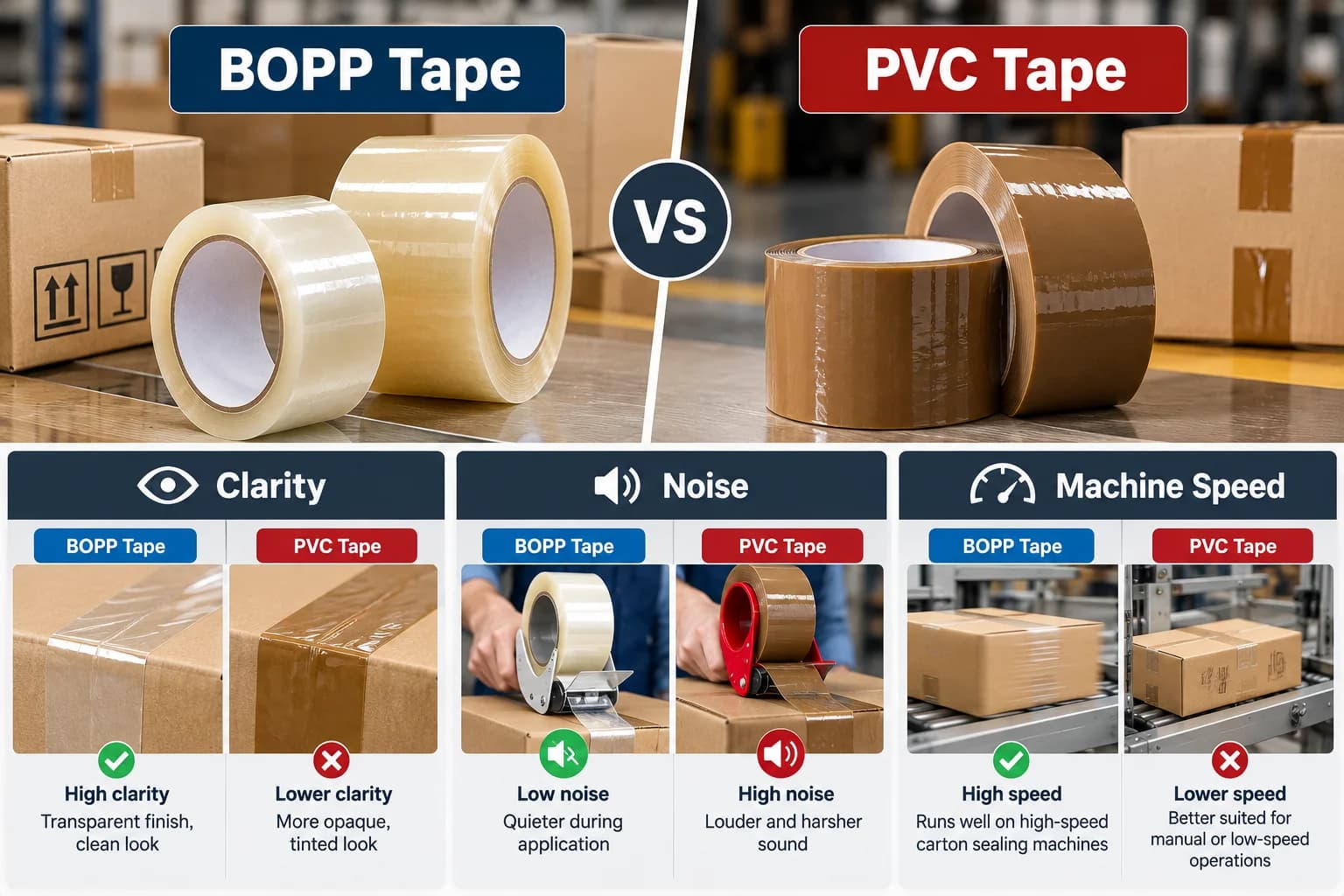
Buyers ask us about PVC tape often enough that it is worth laying out the differences plainly. Both are carton sealing tapes, both come on cores, both look clear or brown off the roll. But the film underneath the adhesive behaves very differently once it is on a shelf, on a dispenser, or running through a high-speed sealing machine. Here is what actually separates them.
What the films are made of
BOPP stands for biaxially oriented polypropylene. The film is stretched in two directions during manufacturing, which gives it strength and stability without much stretch left in it once it is made. PVC tape uses polyvinyl chloride film, which is softer, has more inherent stretch, and tends to be thicker for a given strength.
This base difference in the film shows up in every other comparison on this list.
Ageing and clarity over time
BOPP film holds its clarity well over months of storage, even under normal warehouse conditions. The polypropylene base does not yellow quickly, and the acrylic adhesive underneath does not discolour the carton surface. Tape applied today and inspected six months later still reads clearly if it has been stored reasonably.
PVC tape yellows faster, especially under heat or direct light. The film itself can turn slightly amber over time, and in warmer Indian warehouse conditions this is more noticeable within a few months. For cartons that sit in storage before dispatch, or for export shipments that may sit in a container for weeks, this matters. A yellowed tape on an otherwise clean carton looks like old stock even if the product inside is fresh.
If your packaging sits for any length of time before it reaches the end customer, BOPP keeps a cleaner appearance for longer.
Noise on dispensing
This is the difference most people notice first, often before they notice anything about the film itself. BOPP tape makes a sharp, consistent tearing sound when pulled off a hand dispenser or tape gun. It is a familiar sound in any warehouse or fulfilment centre.
PVC tape unwinds more quietly. The softer film does not have the same crisp tear, and the sound is more of a dull pull. Some packers actually prefer this for noise-sensitive environments, but it is a minor factor and should not be the deciding one. Noise level has no bearing on seal strength or how well the carton holds during transit.
Machine speed and handling
This is where the difference becomes operationally significant. BOPP tape runs well on automatic and semi-automatic carton sealing machines at higher speeds. The film is stiffer and more dimensionally stable, so it feeds through rollers and blades consistently without stretching or misaligning on the carton flap.
PVC tape, being softer and more elastic, does not hold up as well at high machine speeds. It can stretch slightly during application, which leads to uneven tension on the carton and occasional misfeeds on faster automatic lines. For manual, low-volume taping this is rarely a problem. For a fulfilment operation running thousands of cartons a day through automatic sealers, it becomes a real bottleneck.
If you are running or planning to run automatic case sealers, BOPP is the more dependable choice on machine compatibility alone.
Cost and thickness trade-offs
PVC tape is often sold at a lower micron-to-strength ratio, meaning it needs to be thicker to deliver comparable tensile strength to BOPP. This affects both the per-roll cost and the amount of tape used per carton, since thicker tape unwinds faster per metre of actual coverage.
BOPP tape in the 45 to 60 micron range typically matches or beats the sealing performance of a thicker PVC roll, while using less material per carton. Over high volumes this adds up in both material cost and storage space for rolls.
Where each one actually fits
PVC tape still has use cases. It is common in some printing and stationery applications, in certain bookbinding and repair tasks, and in low-volume manual packing where machine speed and long-term clarity are not priorities. Its softness also gives it some conformability advantages on irregular surfaces.
BOPP tape is the better fit for:
- E-commerce and FMCG cartons going through automatic sealing lines
- Export shipments that sit in storage or transit for weeks and need to stay clear and presentable
- Any operation running high daily carton volumes where machine speed and consistency matter
- Pharma and cold-chain cartons where tape needs to hold adhesion across temperature swings
- Furniture, footwear and apparel cartons needing heavier micron tape for bulkier, heavier loads
A simple way to decide
If your packing process is largely manual, low volume, and tape appearance after weeks of storage does not matter much, PVC tape can work and may be marginally cheaper per roll. If you are running any kind of automatic sealing equipment, shipping cartons that will sit before use, or sealing for export, BOPP tape is the more reliable choice on speed, clarity and consistency.
Most buyers moving from manual to automated sealing lines end up switching to BOPP at that point regardless of what they used before, simply because PVC does not keep pace with machine speed requirements. If you are scaling up operations, it is worth making that switch early rather than after you have already invested in automatic sealers that do not run PVC tape well.
Your product, our package
Send us your requirement
Widths, colours, artwork, monthly volume: share what you need and we will come back with a price and a date.